
Building on the leadership, strategy, and discipline established by the BSLC and
delivered through the SLB and its funded programs in the U.S., an expanded vision for
lumber building solutions adoption could ultimately deliver 11.6 billion board feet
(BBF) of incremental volume in Canada and the U.S. by 2035. This represents an over
25% increase in consumption versus 2024 levels—driving domestic investment,
innovation, and job creation in communities that depend on the lumber industry.
The lumber industry can maximize market share by pursuing opportunities to grow
demand for lumber in residential and nonresidential construction, innovative building
systems, and in markets outside of North America.
Delivering Attainable
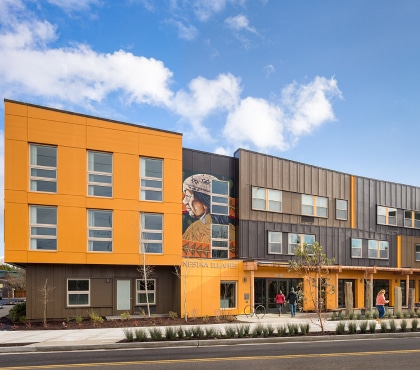
and Affordable Housing

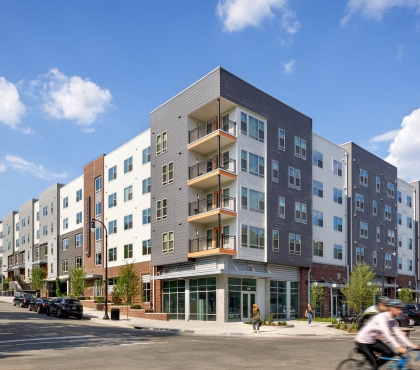
Lumber building solutions offer the most cost-effective and timely solutions for communities and developers to solve the housing crisis, specifically in the attainable and affordable housing sectors. Conservative growth projections across multifamily 1-4 story, 5-8 story, and 9+ story buildings yield 3.0 BBF of incremental annual demand.
Roll Over For More
Market Transformation:
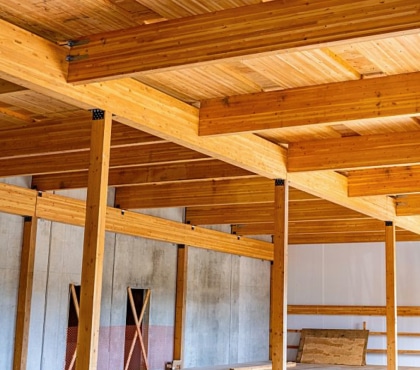
Niche to Mainstream

The value proposition and success of lumber products and building systems in other market segments are transferable to repeatable and scalable nonresidential building types. Total incremental annual softwood lumber consumption achievable in the nonresidential segment is 8.7 BBF by 2035, led by warehouses, educational facilities, and commercial buildings.
Roll Over For More
Accelerating
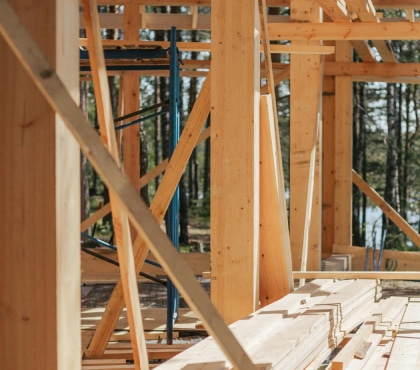
Innovation

Expanded public-private partnerships offer an opportunity for industry to leverage government funding to expand operations and market growth.
Roll Over For More
Expanded Collaboration
and Market Expansion

Pursuing collaboration between the U.S., Canada, and beyond while supporting a global shift toward wood construction is a logical complement to the attainable/affordable housing, nonresidential, and innovation efforts in the U.S. market.
Roll Over For More
Maximizing Potential
A unified North American “One Voice” strategy positions the lumber industry to overcome fragmented advocacy, unlock its full value proposition, and compete more effectively against heavily funded alternative materials. By aligning U.S. and Canadian stakeholders across advocacy, as well as the current strategy focused on codes, communications, conversion, and education, the industry can eliminate duplication, scale its impact, and accelerate the shift of wood construction from niche to mainstream. Centralizing strategy, strengthening policy influence, addressing code barriers, and engaging audiences from early education through professional practice will create a cohesive ecosystem that drives broader adoption of lumber building solutions.
To fully realize market potential, the industry must also address structural barriers in insurance and finance while modernizing its organizational model. Expanding underwriting options, exploring captive insurance, and developing mission-driven financing tools can reduce developer risk and catalyze more mass timber projects. At the same time, evolving beyond current SLB governance toward a more flexible, industry-centric structure will improve efficiency, broaden allowable activities such as lobbying, and scale proven outcomes. Together, these advancements create a high-impact, sustainable path forward for driving long-term growth of wood-based construction across North America.
